
 日本語
日本語 한국어
한국어 Français
 Deutsch
 Español
 Italiano
 Português
 Việt Nam
 Türkçe
 عربي
عربي  русский
  Čeština
 ไทย
ไทย Eesti
Eesti Gaeilgenah Éireann
 Bai Miaowen
 íslenska
 Cymraeg
 Български
 اردو
اردو Polski
 hrvatski
 українська
 bosanski
 فارسی
فارسی Lietuvių
 Latviešu
 עברית
עברית România limbi
 Ελληνικά
 dansk
dansk magyar
 Norsk
Norsk suomi
suomi Nederlands
 Svenska
 slovenčina
 slovenščina
 हिंदी
हिंदी Indonesia
 Melayu
 Malti
Malti Kreyòl Ayisyen
 Català
 বাংলা
বাংলা Srbija jezik (latinica)
 O'zbek
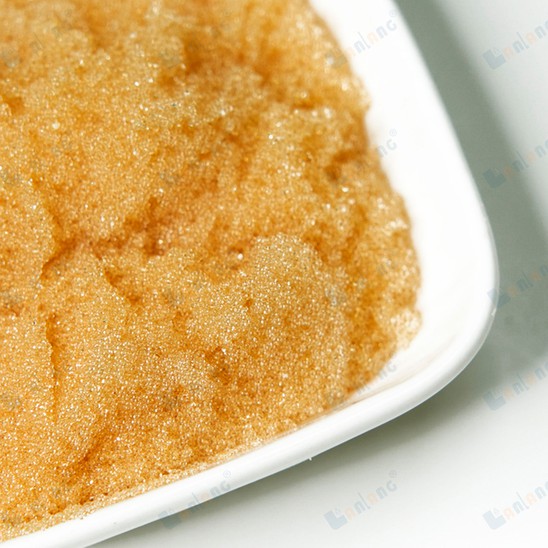
What is the difference between gel and macroporous ion exchange resin?
In the field of ion exchange, two main types of resins are often used: gel and macroporous ion exchange resins. While both resins are designed to remove specific ions from solution, they have unique properties that differentiate one from the other.
Gel ion exchange resin is an amorphous matrix that has a uniform and dense structure. It has a high degree of cross-linking, which means that the resin is highly compact and has a small pore size. This makes gel resin ideal for removing small ions such as lithium, sodium, and potassium. Due to its high cross-linking, however, gel resin has a lower capacity for larger ions such as calcium and magnesium.
Macroporous ion exchange resin, on the other hand, has a more irregular matrix with large voids, or pores, that allow for easy diffusion of ions. As such, macroporous resin has a higher capacity for larger ions, and is commonly used for water softening applications to remove calcium and magnesium. It is also more resistant to fouling and physical stresses than gel resin.
Another difference between the two resins is their chemical stability. Gel resin is generally more stable than macroporous resin, and is more resistant to oxidation and hydrolysis. This makes gel resin suitable for use in harsh chemical environments, such as in the pharmaceutical and food industries.
In terms of operational parameters, macroporous resin has a higher flow rate due to its larger pore size, which allows for faster exchange kinetics. Gel resin, on the other hand, has a slower flow rate because ions have to diffuse through the small pore size.
Both gel and macroporous ion exchange resins have their unique properties and applications. Gel resin is ideal for removing smaller ions in harsh chemical environments, while macroporous resin is commonly used in water softening applications due to its higher capacity for larger ions.
