
 日本語
日本語 한국어
한국어 Français
 Deutsch
 Español
 Italiano
 Português
 Việt Nam
 Türkçe
 عربي
عربي  русский
  Čeština
 ไทย
ไทย Eesti
Eesti Gaeilgenah Éireann
 Bai Miaowen
 íslenska
 Cymraeg
 Български
 اردو
اردو Polski
 hrvatski
 українська
 bosanski
 فارسی
فارسی Lietuvių
 Latviešu
 עברית
עברית România limbi
 Ελληνικά
 dansk
dansk magyar
 Norsk
Norsk suomi
suomi Nederlands
 Svenska
 slovenčina
 slovenščina
 हिंदी
हिंदी Indonesia
 Melayu
 Malti
Malti Kreyòl Ayisyen
 Català
 বাংলা
বাংলা Srbija jezik (latinica)
 O'zbek

What is the difference between cation and anion exchange resin?
When it comes to water softening and purification, ion exchange resin is a common method used to remove contaminants. This process involves using either cation or anion exchange resin, depending on the type of contaminants that need to be removed. But what is the difference between cation and anion exchange resin?
First, let's understand the basics of ion exchange resin. This method involves exchanging ions present in the water with ions present on the resin beads. For instance, in hard water, calcium and magnesium ions are present, which can be replaced with sodium ions present on the resin beads. This results in softening of the water, as sodium ions do not contribute to hardness.
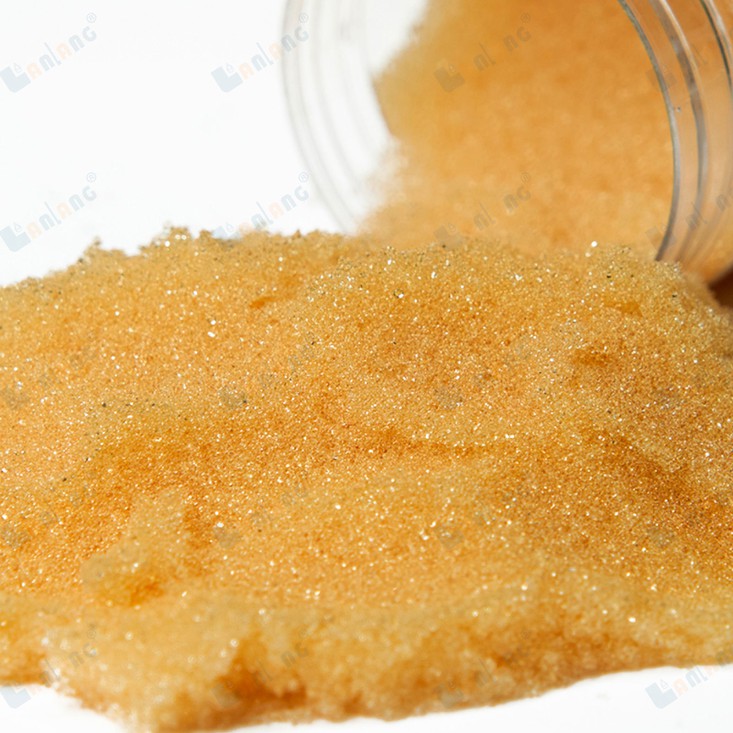
Now, coming to the difference between cation and anion exchange resin. Cation exchange resin is used to remove positively charged ions like calcium, magnesium, and iron, which are responsible for hardness. These resins contain sulfonate-functionalized polymers, which have negatively charged sites to attract positively charged ions. Upon contact with the resin beads, these ions exchange with the sodium ions in the resin, resulting in softening of the water.
On the other hand, anion exchange resin is used to remove negatively charged ions like nitrate, sulfate, and fluoride. These resins contain amine-functionalized polymers, which have positively charged sites to attract negatively charged ions. Upon contact with the resin beads, these ions exchange with chloride ions in the resin, resulting in the removal of these contaminants.
While both cation and anion exchange resin work on the same principle of ion exchange, they differ in the type of ions they can remove. Cation exchange resin is used for the removal of positively charged ions like calcium and magnesium, while anion exchange resin is used for the removal of negatively charged ions like nitrate and fluoride. Understanding the difference between these two types of resin is important for choosing the right resin for water purification and softening.
