
 日本語
日本語 한국어
한국어 Français
 Deutsch
 Español
 Italiano
 Português
 Việt Nam
 Türkçe
 عربي
عربي  русский
  Čeština
 ไทย
ไทย Eesti
Eesti Gaeilgenah Éireann
 Bai Miaowen
 íslenska
 Cymraeg
 Български
 اردو
اردو Polski
 hrvatski
 українська
 bosanski
 فارسی
فارسی Lietuvių
 Latviešu
 עברית
עברית România limbi
 Ελληνικά
 dansk
dansk magyar
 Norsk
Norsk suomi
suomi Nederlands
 Svenska
 slovenčina
 slovenščina
 हिंदी
हिंदी Indonesia
 Melayu
 Malti
Malti Kreyòl Ayisyen
 Català
 বাংলা
বাংলা Srbija jezik (latinica)
 O'zbek

Conventional regeneration treatment
After the ion exchange resin is used for a period of time, the adsorbed impurities are close to the saturated state, and it is necessary to carry out regeneration treatment, and the ions and other impurities adsorbed by the resin are eluted with chemical agents to restore the original composition and properties. In practical application, in order to reduce the cost of regeneration, it is necessary to properly control the amount of regeneration agent, so that the performance of the resin can be restored to the most economical and reasonable regeneration level, usually the recovery degree of control performance is 70 to 80%. If a higher level of regeneration is to be achieved, the regeneration dose will be greatly increased and the utilization rate of the regenerant will be decreased.
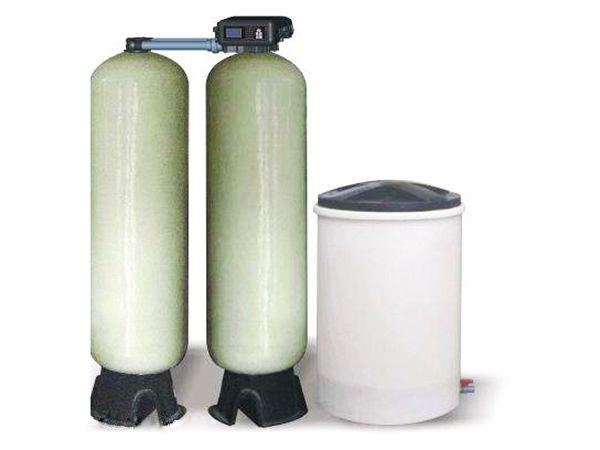
The regeneration of resin should be based on the type of resin, characteristics, as well as the economy of operation, the selection of appropriate regeneration agents and working conditions.
The regeneration properties of resin are closely related to its type and structure. The regeneration of strong acid and strong basic resins is difficult, and the regeneration dose is much higher than the theoretical value. Weak acid or weak basic resin is easier to regenerate, and the regeneration dose is only slightly more than the theoretical value. In addition, the resin with large porosity and low crosslinking degree is easy to regenerate, while the resin with gel type and high crosslinking degree has a longer regeneration reaction time.
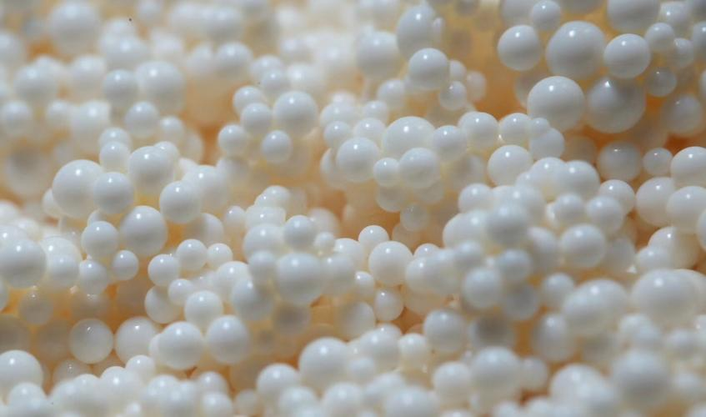
Special regeneration treatment
More seriously polluted resins can be repeatedly treated with acid or alkaline salt solution, such as using 10%NaCl +1%NaOH alkali salt solution to dissolve organic matter, then using 4%HCl or 10%NaOH and 1%HCl respectively to dissolve inorganic matter, and then using 10%NaCl +1%NaOH treatment. Performed at about 70 ° C.
If the effect of the above treatment does not meet the requirements, it can be treated by oxidation method. That is, after washing the resin with water, the sodium hypochlorite solution with a concentration of 0.5% is injected, the flow rate is controlled by 2 to 4BV/h, the amount of 10 to 20BV is passed, and then washed with water and treated with salt water. It should be noted that oxidation treatment may oxidize the bonding bonds of macromolecules in the structure of the resin, resulting in the degradation of the resin, the expansion degree increases, and it is easy to fracture, so it is not suitable for common use. Usually 50 cycles are used before one oxidation treatment. Because the chlorine resin has strong oxidation resistance, the resin is treated with salt water before oxidation treatment to become chlorine, which can also avoid the change of pH value during the treatment process and make the oxidation more stable.
