
 日本語
日本語 한국어
한국어 Français
 Deutsch
 Español
 Italiano
 Português
 Việt Nam
 Türkçe
 عربي
عربي  русский
  Čeština
 ไทย
ไทย Eesti
Eesti Gaeilgenah Éireann
 Bai Miaowen
 íslenska
 Cymraeg
 Български
 اردو
اردو Polski
 hrvatski
 українська
 bosanski
 فارسی
فارسی Lietuvių
 Latviešu
 עברית
עברית România limbi
 Ελληνικά
 dansk
dansk magyar
 Norsk
Norsk suomi
suomi Nederlands
 Svenska
 slovenčina
 slovenščina
 हिंदी
हिंदी Indonesia
 Melayu
 Malti
Malti Kreyòl Ayisyen
 Català
 বাংলা
বাংলা Srbija jezik (latinica)
 O'zbek

A water softener is a device that is used to remove minerals that make water hard and cause scaling in pipes, on appliances, and on dishes. But how does it work? In this article, we'll explore the process of water softening and explain how it works.
Water softening is the process of removing the minerals that cause hardness in water, such as calcium and magnesium. These minerals are removed through a process called ion exchange.
The water softener contains a resin tank that is filled with small beads made of polystyrene. These beads are referred to as ion exchange resin beads. The ion exchange resin beads are charged with sodium or potassium ions.
As the water flows into the resin tank, the calcium and magnesium ions in the water are attracted to the negatively charged resin beads. These ions exchange places with the sodium or potassium ions on the beads, effectively removing the hardness-causing minerals from the water.
Once the resin beads have become saturated with calcium and magnesium ions, they need to be regenerated. Regeneration is the process of flushing out the saturated beads and replacing them with fresh, charged beads. This is done by adding a concentrated solution of saltwater to the resin tank. The saltwater solution is made up of sodium or potassium chloride.
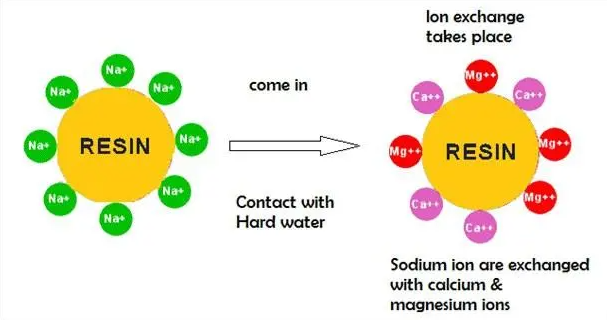
The saltwater flows through the resin tank, replacing the calcium and magnesium ions on the resin beads with sodium or potassium ions. This process regenerates the resin tank and allows it to continue removing hardness-causing minerals from the water.
After the regeneration cycle is complete, the saltwater solution is flushed out of the resin tank, leaving the resin beads charged with sodium or potassium ions once again. This process is automated in most water softeners, so you do not need to do anything.
Water softeners are an effective way to remove hard water from your home's water supply. They ensure that your appliances and plumbing remain scale-free, which can prolong their lifespan. In addition, soft water can be gentler on your hair, skin, and clothing.
In conclusion, water softeners work by removing hardness-causing minerals from water through the process of ion exchange. The resin beads in the water softener tank are charged with sodium or potassium ions, and as water flows through, hardness-causing minerals are exchanged for the sodium or potassium ions. When the resin beads become saturated, they are regenerated with a concentrated saltwater solution. This ensures that your home's water supply remains soft and free of scale.
