日本語
日本語 한국어
한국어 Français
 Deutsch
 Español
 Italiano
 Português
 Việt Nam
 Türkçe
 عربي
عربي  русский
  Čeština
 ไทย
ไทย Eesti
Eesti Gaeilgenah Éireann
 Bai Miaowen
 íslenska
 Cymraeg
 Български
 اردو
اردو Polski
 hrvatski
 українська
 bosanski
 فارسی
فارسی Lietuvių
 Latviešu
 עברית
עברית România limbi
 Ελληνικά
 dansk
dansk magyar
 Norsk
Norsk suomi
suomi Nederlands
 Svenska
 slovenčina
 slovenščina
 हिंदी
हिंदी Indonesia
 Melayu
 Malti
Malti Kreyòl Ayisyen
 Català
 বাংলা
বাংলা Srbija jezik (latinica)
 O'zbek

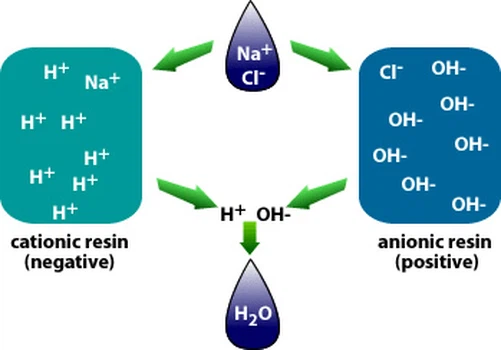
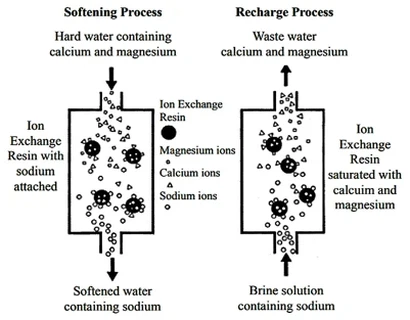
Ion exchange desalt of water is to exchange various cations in water into H+ with H type cation exchange resin, exchange various anions in water into OH- with OH type anion exchange resin, and the H+ and OH- ions entering the water form water molecules H2O, or let the water pass through the Yangyin mixed ion exchange resin layer. The positive and anion in water are replaced by H+ and OH- ions almost simultaneously. In this way, when the water is treated by ion exchange, various inorganic salts in the water can be removed. The H ion exchange reaction and OH ion exchange reaction occurring in the process and the reaction occurring in the resin regeneration process are as follows:
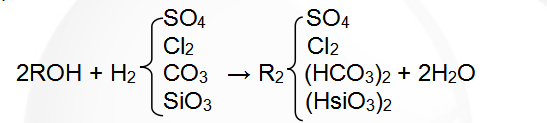
(1) Hydrogen ion exchange reaction formula:

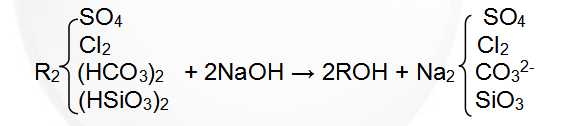
The regenerative reaction formula is:

(2) The hydroxide ion exchange reaction equation is:
Regenerative reaction formula:
The water entering the ion exchanger usually contains a large amount of bicarbonate. It is a major component of the alkalinity of natural water. When the water is exchanged by H ions, the bicarbonate is converted into carbonic acid, and the carbonic acid originally contained in the water can be removed with a carburizer. This reduces the burden on the anion exchanger and reduces consumption.
The effluent of primary demineralization system: hardness ≈0umol/L, silica ≤100ug/L, conductivity ≤5uS/cm.
Secondary desalting system effluent: silica ≤20ug/L, conductivity ≤0.2uS/cm.